Vietnam puts pre-packed products under scrutiny on possible false weights
Saturday, September 19, 2015, 15:29 GMT+7





With few Vietnamese consumers checking the weights of the pre-packed goods, many dishonest traders are selling products that weigh much lighter than their labels claim, prompting authorities to launch a nationwide inspection.
The three-month inspection on the weight of pre-packed products is the first of its kind ever launched by the Ministry of Science and Technology, Tran Minh Dung, head of the ministry’s secretariat, told Tuoi Tre (Youth) newspaper in an interview published Saturday.
Pre-packed products of 16 commodities, including dairy products, seafood, beer and beverage, cement, and plant protection drugs, on sale in all of the country’s 63 cities and provinces are under the scrutiny running from July the September, Dung said.
The Ministry of Science and Technology inspectorate has so far received reports from 30 localities, with 265 out of 1,288 inspected facilities found with labeling false weights on their products, according to the official.
These dishonest traders have been collectively fined VND600 million (US$26,786), whereas the products with false weights have been confiscated, Dung said.
These facilities are also requested to follow regulations on labeling product weight, and local authorities are asked to publicize their names for public reference, he added.
Most Vietnamese consumers do not have the habit of checking the weights of the pre-packed products.
“We will first check the price, expiry date, nutrition content, and weight of the products,” Huyen, a bank employee based in Hanoi, admitted.
A quick survey by Tuoi Tre on ten shoppers at a Hanoi supermarket found that eight of them have never checked the product weights before.
“I once found that a can of baby formula weights lighter than the label claims but did not know where to lodge a complaint to, so I just let it go,” Ta Thanh Dung, a resident from Long Bien District, said.
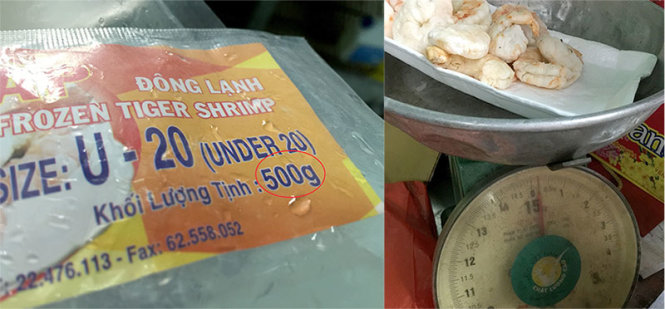
In Ho Chi Minh City, a check by Tuoi Tre found that a 500g pack of frozen shrimp on sale at a supermarket in Phu Nhuan District actually weighs only 200g.
The director of a supermarket admitted that even these distribution channels do not check the weights of the pre-packed products.
“What we care about is the food safety and product quality,” he said.
Like us on Facebook or follow us on Twitter to get the latest news about Vietnam!

Despite running a small shop, the Egyptian man often spends holidays like Reunification Day visiting friends or engaging in sports activities

These stations are waiting for operation
1 day ago
From May onward, the Vietnamese car market will welcome multiple new hybrid car models, with prices averaging VND1 billion (US$39,000)
16 hours ago
The initiative is expected to yield indirect revenues of around $15-16 billion for the economy
1 week ago
He will spend VND10 trillion (US$394 million) from his pocket building charging stations in the next three years
6 days ago
Exorbitant airfare prices are presenting obstacles for tourism destinations in Vietnam
1 week ago Despite running a small shop, the Egyptian man often spends holidays like Reunification Day visiting friends or engaging in sports activities


He drew the virus, vaccine, and earth on the exterior walls of a house

Despite running a small shop, the Egyptian man often spends holidays like Reunification Day visiting friends or engaging in sports activities

This marks his second cross-country journey

The building was initially planned to be the same as other construction works, but a ‘green’ change was made to it in 2022

Planet Lock from Thailand became the champion in the international board showcase category

Saltwater has intruded into the Cai and Quan Truong Rivers, leading to the concentration of chlorides in some of their sections soaring

The incident is the latest in a string of deadly disasters to hit Guangdong in recent weeks

The dollar gained over 0.5 percent on Tuesday on all six currencies that make up the dollar index

Since the start of the holiday on Saturday last week, crowds of tourists have flocked to Phu Quoc City
From May onward, the Vietnamese car market will welcome multiple new hybrid car models, with prices averaging VND1 billion (US$39,000)

The tragedy occurred at 8:10 am at Sunrise Wood Trading Production Company in Thien Tan Commune under Vinh Cuu District


